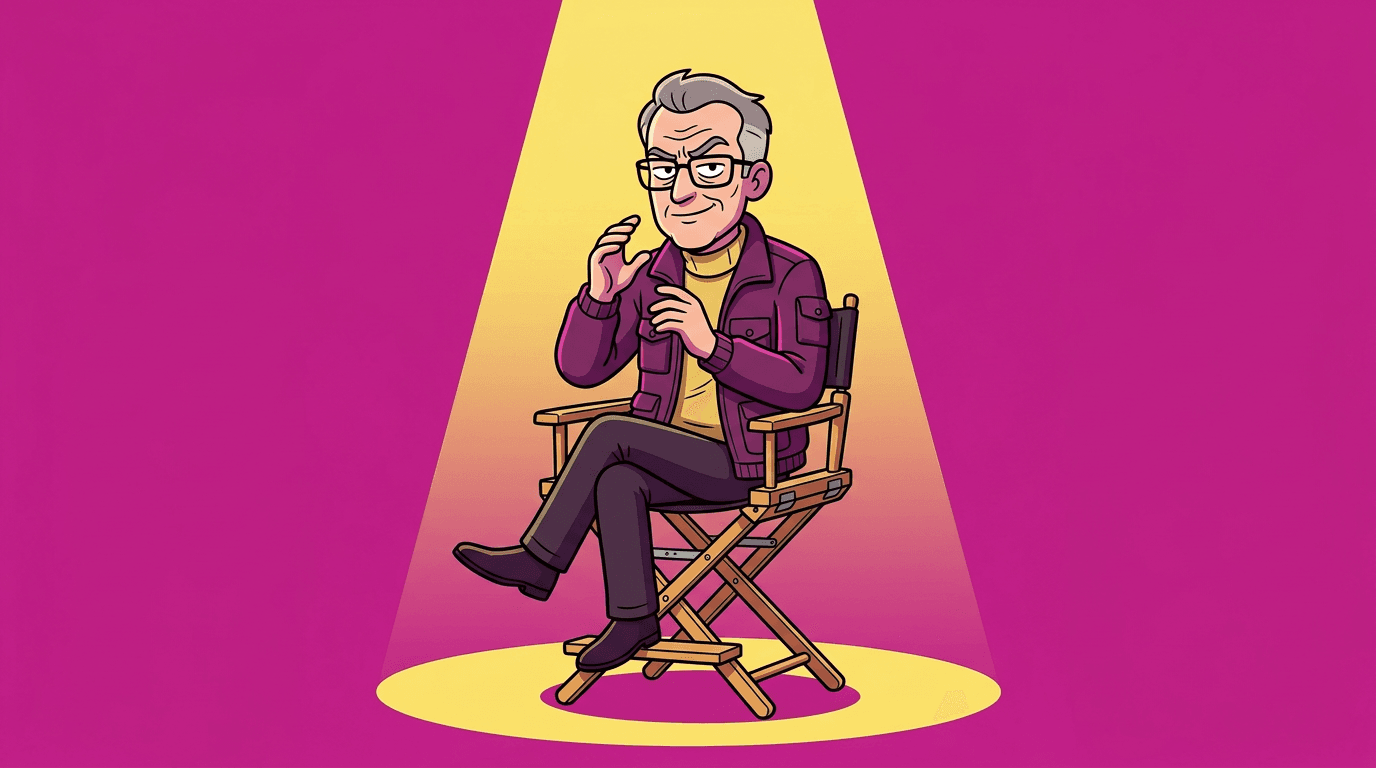
Let's get one thing straight — you didn't ask to be the person who sees everything. It just happened, probably around the same time you realized that observing people is infinitely more entertaining than participating in their chaos. You're the friend who notices when someone's energy shifts mid-sentence, who clocks the micro-expression that nobody else caught, who remembers exactly what someone said seven months ago and files it away like emotional evidence.
Your friends might call you "savage" or "too much" or "why would you even notice that," but here's the thing they won't admit — they need you. Every friend group needs someone who can cut through the nonsense and name what's actually happening. You're the person who says the thing everyone's thinking but nobody wants to say out loud, and you do it with a delivery so precise it lands somewhere between a stand-up set and a therapy session.
In psychology, this maps closely to the concept of the social observer — someone with unusually high interpersonal perception. Research on social intelligence suggests that people who excel at reading group dynamics often develop this skill as a coping mechanism. At some point, watching became safer than participating, and you got so good at it that it became your whole thing.
The downside? You're so busy narrating everyone else's story that you sometimes forget to live your own. There's a reason you deflect with humor. There's a reason your hottest takes about other people's relationships come faster than any honest conversation about yours. The commentary booth is comfortable because it's elevated — you can see everything without anyone seeing you.
Your friends adore your roasts, your observations, your ability to summarize a situation in one devastating sentence. But the ones who really love you? They're the ones who occasionally turn the camera around and ask, "Okay but how are YOU doing?" And they notice when you dodge.
Here's what makes you irreplaceable though — you're the group's memory. You're the one who remembers the inside jokes, who can retell the stories better than they originally happened, who turns ordinary Tuesday nights into legendary episodes. Without you, things would still happen, but nobody would remember them correctly.
The growth edge for The Narrator is learning that vulnerability isn't a plot hole — it's the season finale everyone's been waiting for. You don't have to perform every interaction. Sometimes the most powerful thing you can do is put down the metaphorical microphone and just... be in the scene. Not observing it. Not commenting on it. Just being a character in it, messy and unscripted and real.
Your best dynamic in the group? The Wildcard. They create the chaos, you document it — it's the most productive symbiotic relationship since remora fish and sharks. You and The Glue have mutual respect, but they lowkey wish you'd stop narrating their breakdowns. And The Phantom? You two could sit in silence for three hours and call it a great hangout, but the group needs at least one of you to actually speak.
Now go drop this result in your group chat and ask everyone: if your friend group was a sitcom, what would the title be? We already know you'd write the pilot.