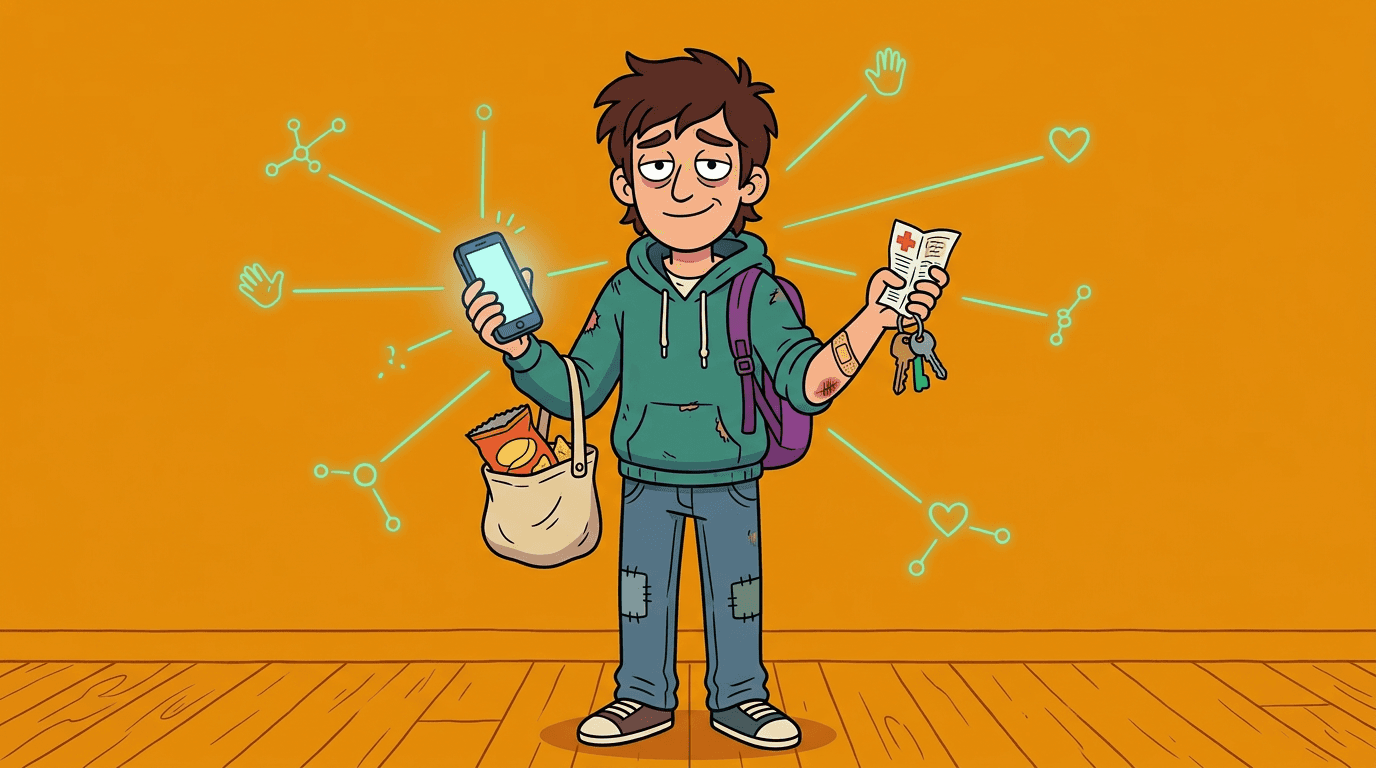
Nobody warned you that being the reliable one would feel this lonely. And yet here you are — the reason this friend group exists in any functional capacity, and the worst part is that you know it. You're the one who remembers birthdays without Facebook reminders, who notices when someone's been quiet for too long, who sends the "hey, you good?" text that saves someone's entire week. You are, in every measurable way, the emotional infrastructure of your social circle.
And it's destroying you a little bit, isn't it?
Here's the pattern — someone in the group has a crisis, and you show up. Not because someone asked you to, but because your nervous system physically won't let you not show up. You've driven across town at midnight with snacks. You've mediated fights between people who didn't even know you knew about the fight. You've held space for so many people's emotions that your own feelings are essentially subletting a corner of your brain that you never visit.
Psychologists call this the caretaker role, and it's deeply rooted in attachment theory. People who become The Glue often learned early that their value in relationships was tied to their usefulness. If you were the responsible kid, the one who managed everyone's emotions at home, congratulations — you've been doing this unpaid labor since you were eleven, and your friend group is just the latest beneficiary.
The thing about glue is that nobody thinks about it until something falls apart. Your friends love you — genuinely, deeply — but they've gotten so used to you holding things together that they've stopped noticing the effort. They assume you're fine because you're always fine. They don't check on you because checking on people is YOUR thing, and the idea that you might need checking on doesn't compute.
And you let them believe it. Because asking for help feels like admitting that the system you built — the careful, invisible architecture of care that keeps everyone connected — has a crack in it. And if The Glue cracks, what happens to everyone else?
Here's the truth nobody tells The Glue: you are allowed to be a person who needs things. You're allowed to fall apart without it being a group emergency. You're allowed to not answer the phone, to not plan the thing, to not be the first person who reaches out. And the friends who actually deserve you? They'll still be there when you stop performing selflessness and start practicing it for real — starting with yourself.
The growth edge is learning that holding everything together isn't love — it's control dressed up in kindness. Real connection means letting things get messy sometimes, letting someone else pick up the pieces, letting yourself be the one who's held instead of always doing the holding.
Your best dynamic? The Phantom, weirdly. You're the only one who checks on them consistently enough that they actually respond, and their rare appearances remind you that not everything needs to be managed. The Narrator appreciates you more than they'll ever say — you're the reason they have a stable group to observe. Watch out for The Wildcard though — you love them, but cleaning up their messes is a full-time job you didn't apply for.
Share this with your group chat — you know, the one you secretly manage — and ask them what the show would be called. You've probably already thought of a title.