Find My Label

Golden Retriever vs Black Cat: The Real Psychology Behind Dating's Favorite Personality Theory

February 26, 2026·8 min read
Golden Retriever vs Black Cat: The Real Psychology Behind Dating's Favorite Personality Theory
PsychologyRelationshipsDatingPop CultureTikTok

You’ve Already Been Sorted

Somewhere between your third scroll through TikTok and your morning coffee going cold, someone tagged your partner as a “golden retriever boyfriend.” Or maybe your group chat has already decided you’re the “black cat girlfriend” — the one who shows up to brunch fifteen minutes late, sunglasses on, radiating a distinct “I’d rather be home” energy.

You laughed. You shared it. And then, quietly, you thought: wait, is that actually me?

Here’s the thing — hundreds of millions of TikTok views later, this isn’t just a meme anymore. There’s a reason this particular animal metaphor stuck when thousands of others didn’t. And the psychology behind it is a lot more interesting than “he’s a good boy and she’s mysterious.”

TL;DR: The golden retriever/black cat theory maps onto real psychological frameworks — attachment styles, the Big Five personality traits, and complementarity theory. It went viral because animal metaphors bypass our defensiveness and make self-reflection feel like play. It’s not science. But it’s not nothing, either.

What Even Is a Golden Retriever Boyfriend?

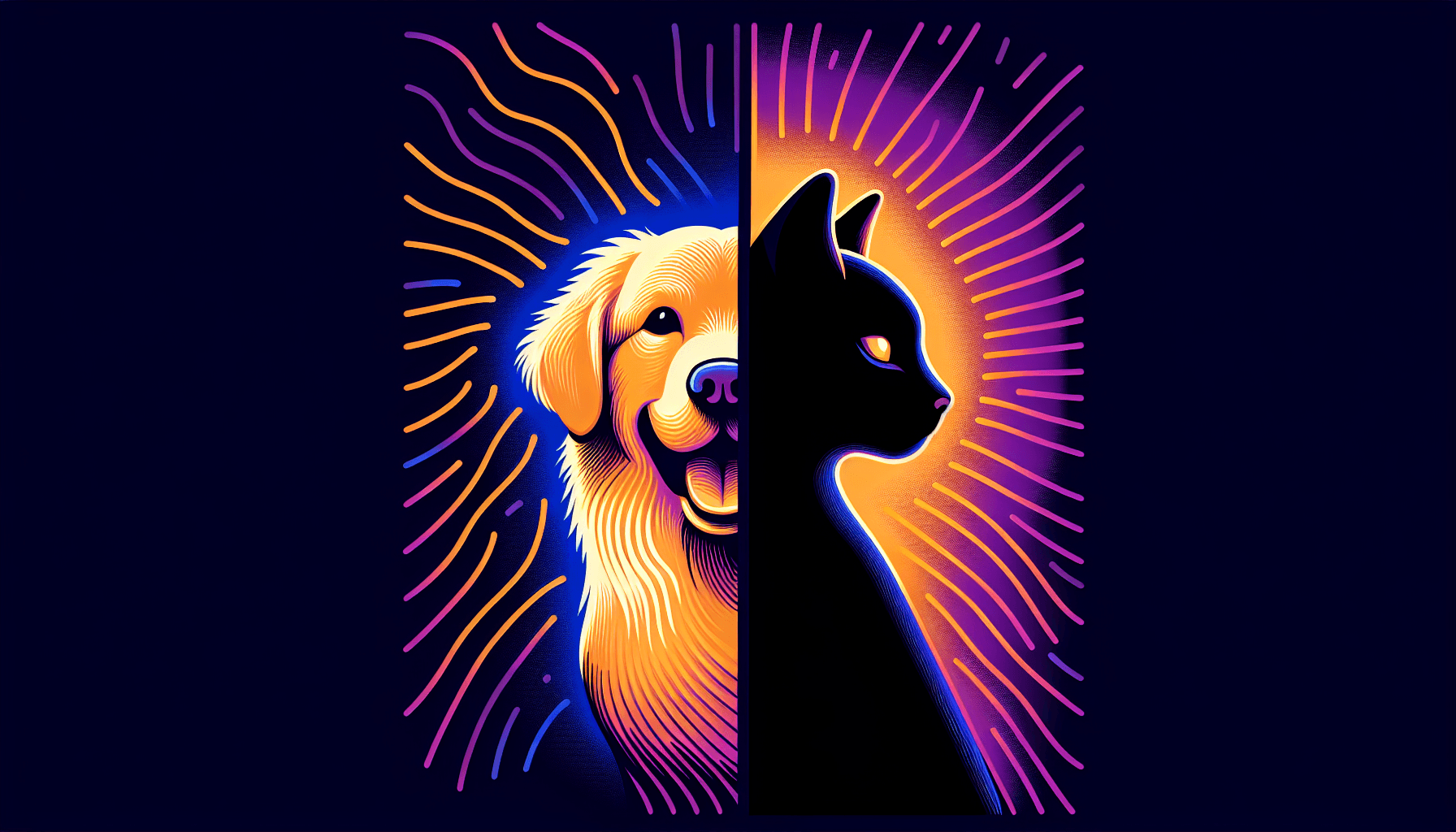
The golden retriever boyfriend personality is easy to spot: think Travis Kelce at a Taylor Swift concert. Boundless enthusiasm. Zero chill. The kind of guy who introduces himself to your parents before you’ve asked him to and genuinely enjoys it.

Golden retriever boyfriends are loyal, goofy, emotionally transparent, and almost aggressively affectionate. They text back immediately — not because they’re checking a dating rulebook, but because it literally didn’t occur to them to wait. They have the emotional availability of a Labrador who just heard the word “walk.”

The term started floating around TikTok and Twitter around 2021, first applied to fictional characters — think Peeta Mellark, Steve Harrington, early-season Jim Halpert. Then people started recognizing it in real life, and the label stuck.

And the Black Cat? She Entered the Chat.

If the golden retriever is an open book, the black cat is a book you found in a secondhand shop with no cover and half the pages in French.

Black cat energy means independent, selectively affectionate, a little mysterious, and deeply allergic to small talk. She loves you — she’s just not going to say it in front of your friends at a barbecue. Affection happens on her terms, which makes the moments she does open up feel like getting a wild animal to eat from your hand.

And let’s kill the gender assumption right now. Despite TikTok’s obsession with “golden retriever boyfriend / black cat girlfriend,” these are personality energies, not gendered roles. Plenty of men are the black cat in their relationship, and plenty of women are the golden retriever who won’t stop sending memes at 7 AM.

Why Your Brain Loves Sorting People Into Animal Boxes

Okay, so it’s a fun label. But why this label? Why animals?

Humans have been using animal metaphors to describe personality since literally forever. Calling someone “a fox” or “a snake” predates psychology by a few thousand years. Cognitive linguist George Lakoff argued that metaphor isn’t just decoration — it’s how we think. We understand abstract concepts (like personality) by mapping them onto concrete, familiar things (like animals we’ve lived alongside for millennia).

Animal metaphors work especially well for personality because they smuggle in complexity without triggering defensiveness. Tell someone “you have an anxious-preoccupied attachment style with avoidant tendencies,” and watch their eyes glaze. Tell them “you’re a black cat,” and they’ll put it in their Instagram bio within the hour.

Social media accelerated this by a factor of a thousand. The entire economy of platforms like TikTok runs on identity content — labels, types, categories. “Which one are you?” is the most engagement-bait question in the history of the internet. The golden retriever/black cat binary landed at the exact intersection of relatable, shareable, and vague enough that almost everyone can see themselves in one.

The Psychology That Actually Makes This Work

Here’s where it gets interesting. Underneath the meme, there are real frameworks doing the heavy lifting.

Complementarity theory — proposed by sociologist Robert Winch in the 1950s — suggests that people are drawn to partners whose traits supplement their own. Not “opposites attract” in the Hollywood sense, but a more nuanced idea: we gravitate toward people who fill gaps we can feel but can’t always name. A golden retriever’s openness and emotional warmth can create the safety a black cat needs to actually let someone in. A black cat’s groundedness and independence can stabilize a golden retriever who’d otherwise burn themselves out trying to make everyone happy.

Clinical psychologist Dr. Sanam Hafeez, speaking to Parade, connected the dots: golden retriever energy often correlates with secure attachment — comfort with closeness, direct communication, emotional consistency. That tracks. Securely attached people don’t play games, don’t withhold affection strategically, don’t vanish for three days to “create mystery.” They just… show up. Reliably. Enthusiastically. Like a golden retriever greeting you at the door every single time.

Black cat energy, on the other hand, maps more closely onto what psychologists call dismissive-avoidant tendencies — a preference for independence, discomfort with too much closeness too fast, an instinct to self-regulate rather than co-regulate. But — and this is crucial — not every black cat is avoidant in the clinical sense. Some people are simply introverted, independent, or slow to trust. The black cat label captures a spectrum, not a diagnosis.

And then there’s the Big Five. Golden retrievers tend to score high on Extraversion and Agreeableness — sociable, warm, cooperative. Black cats lean toward higher Openness (creative, unconventional) and sometimes lower Agreeableness (which, in psychology, doesn’t mean “unpleasant” — it means less inclined to prioritize social harmony over personal authenticity). The pairing works because these trait differences create friction that’s productive, not destructive. You challenge each other without canceling each other out.

The research on complementarity is mixed — some studies find that similarity predicts relationship satisfaction better than difference. But what the golden retriever/black cat dynamic captures isn’t total opposition. It’s selective complementarity: different social energies, but shared core values. He’s loud at parties and she’d rather be reading, but they both believe in loyalty, honesty, and not texting your ex.

When the Golden Retriever Burns Out

Let’s talk about the shadow side, because TikTok won’t.

The golden retriever boyfriend personality has a dark side no one talks about. The boundless availability, the eagerness to please, the “I’m fine, are YOU fine?” default — it can be a mask for something less adorable: people-pleasing. Fawning. A pattern where you abandon your own needs so reflexively that you don’t even notice it’s happening.

Therapists have started flagging this. The “golden retriever boyfriend” who never says no, who absorbs his partner’s moods like a sponge, who defines his worth entirely through how useful he is to someone else — that’s not secure attachment. That’s a fawn response wearing a really good disguise. Brené Brown’s research on vulnerability is relevant here: genuine emotional availability requires boundaries. A golden retriever with no boundaries isn’t emotionally healthy — he’s just tired.

And on the other side: the black cat who “just needs space” can tip into full emotional withdrawal. There’s a meaningful difference between “I recharge alone” and “I disappear when things get hard.” The first is self-care. The second is avoidance. If your black cat independence means your partner never knows where they stand with you, the mystery stops being attractive and starts being exhausting.

The healthiest version of this dynamic isn’t “golden retriever + black cat.” It’s “golden retriever who knows when to stop giving + black cat who knows when to let someone in.”

Beyond the Binary: You’re Probably Both

Here’s where TikTok oversimplifies and real life gets interesting.

Most people aren’t purely one or the other. You might be a golden retriever at work — enthusiastic, collaborative, first to volunteer — and a complete black cat in romantic relationships, guarding your emotional space like it’s a state secret. Context matters. Stress shifts you. The partner you’re with changes which parts of you show up.

Some people have proposed expanding the roster: the German Shepherd (loyal and protective but structured and rule-following), the Labrador (like a golden retriever but with even fewer boundaries), the Siamese Cat (high-maintenance but fiercely devoted once they’ve chosen you). These are fun, but they all point to the same truth: personality is a spectrum, not a binary.

The most useful thing about the golden retriever/black cat framework isn’t the label itself — it’s the conversation it starts. “I’m more of a black cat” is an easier entry point to “I need more alone time than you, and that doesn’t mean I love you less” than any therapy-speak version of the same idea.

So if this silly animal metaphor helps you and your partner actually talk about your differences instead of fighting about them — honestly, that’s more than most personality frameworks deliver. Explore more personality quizzes → and see which labels fit your relationship energy.


Sources: - Levine, A. & Heller, R. (2010). Attached: The New Science of Adult Attachment and How It Can Help You Find — and Keep — Love. TarcherPerigee. - Lakoff, G. & Johnson, M. (1980). Metaphors We Live By. University of Chicago Press. - Winch, R.F. (1958). Mate Selection: A Study of Complementary Needs. Harper & Brothers.