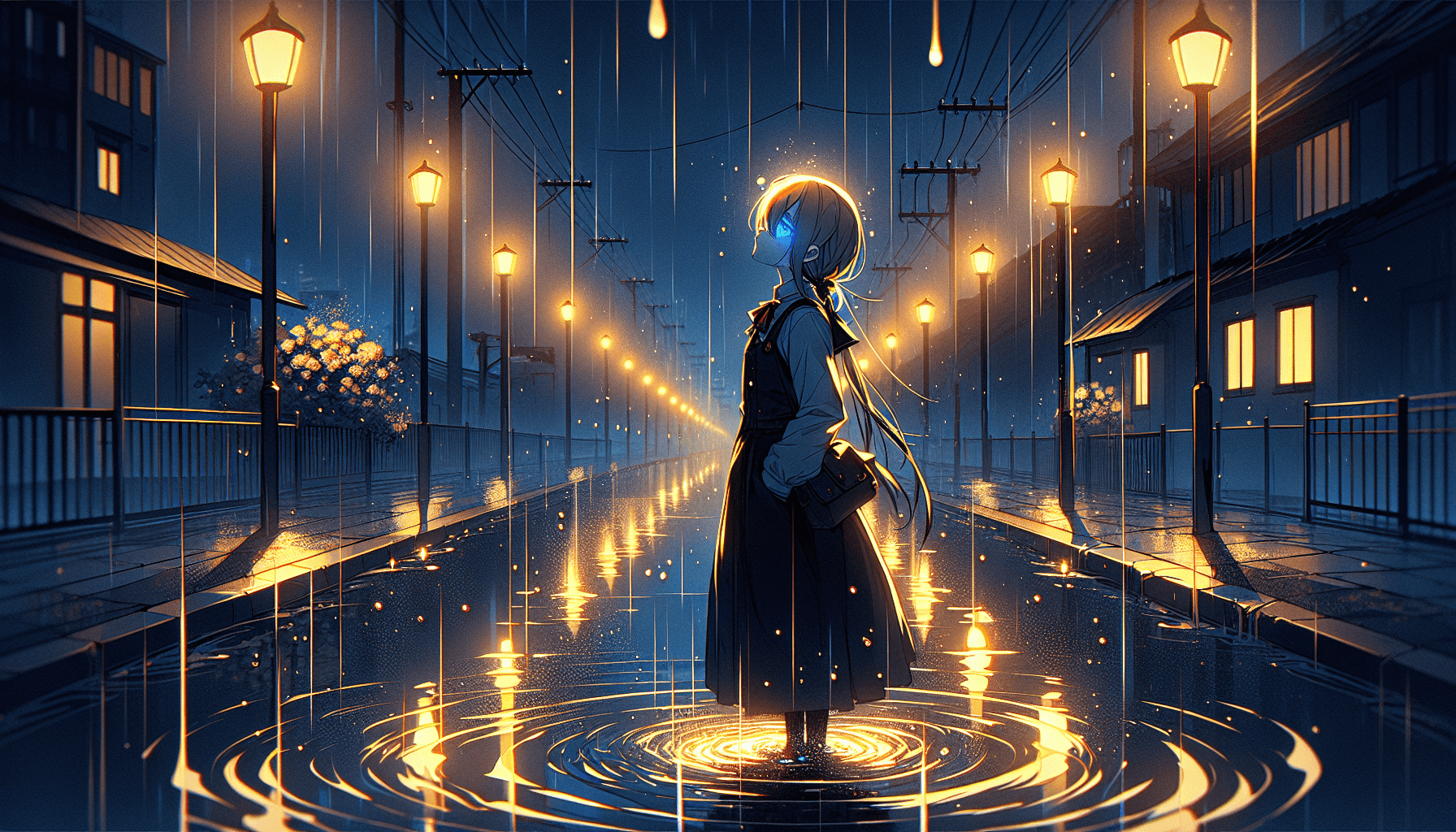
Oh, you beautiful mess. You got The Beautiful Disaster, and something in you probably felt a complicated mix of "seen" and "called out" reading that label. That's fitting, because complicated feelings are your native language. You don't do emotions at normal human volume. You do them at full orchestral intensity, with the string section swelling and the rain falling at cinematically perfect angles, and the worst part is you're aware of how dramatic you're being even while you're being dramatic. Self-awareness and emotional intensity aren't mutually exclusive in your case — they're dance partners.
Let's get into what's actually happening under the surface, because it's more interesting than "sensitive person feels things." Your emotional processing system operates at a bandwidth that most people can't handle. Psychologist Elaine Aron's research on Sensory Processing Sensitivity suggests that roughly 15-20% of the population has nervous systems that literally process stimuli more deeply — more neural activation, more elaborate cognitive processing, more emotional resonance. You're not being dramatic. Your hardware is just running a more complex operating system than the people telling you to calm down.
The way you alchemize pain into art — or at least into something shareable — is your most defining feature and your most effective defense mechanism. A breakup isn't just a breakup for you; it's raw material. A betrayal isn't just painful; it's poetic. This transmutation process is genuinely creative and genuinely protective, because as long as you're crafting the narrative of your suffering, you maintain some authorial control over it. The pain becomes yours to shape rather than something that just happened to you. It's brilliant, honestly. It's also a way of never fully being present in the actual feeling because you're already one step removed, observing yourself feel it.
Your relationships are your masterpieces and your disasters, often simultaneously. You love with an intensity that flatters people until it overwhelms them. You notice the tiny details — the shift in someone's tone, the text that was worded differently than usual, the micro-expression that lasted half a second — and you build entire emotional narratives around these observations. Sometimes you're right, and your perceptiveness saves relationships. Sometimes you're catastrophically wrong, and your pattern-recognition creates problems that didn't exist until you narrated them into reality.
Here's the fear you won't post about: you're terrified that without the depth, without the suffering, without the emotional complexity, you're not interesting. That your value to the people around you is tied to your ability to feel things beautifully and articulate them in ways that make others feel understood. Strip away the poetry, the playlists, the 3 AM revelations, and what's left? You're not sure, and that uncertainty is the one feeling you haven't figured out how to make beautiful yet.
The thing is, you're wrong about that. The people who love you don't love you because you suffer prettily. They love you because your depth is real, because your empathy comes from genuine understanding, because when you turn your attention to someone and really see them, they feel more fully human. That's not a product of pain. That's a product of you.
Your growth isn't about feeling less. God, no. The world needs people who feel at your frequency. It's about learning to sit with feelings that aren't beautiful. The boring sadness. The unsexy anxiety. The grief that doesn't look good in writing. The moments that resist poeticization. Those feelings are just as valid, and they don't need to be transformed into content to count. Sometimes the most radical thing a Beautiful Disaster can do is feel something ugly and let it just be ugly. No filter. No caption. No audience. Just you and the feeling, unperformed.