Welcome to the results you absolutely saw coming — probably while scrolling past this quiz the first three times it appeared in your feed before finally taking it at 2am on a Tuesday.
You're The Doomscroll Goblin, and before you get defensive, just know: this isn't about screen time. Everyone's on their phone too much. This is about what your specific pattern of digital consumption reveals about the way your brain has decided to cope with being completely, utterly cooked.
Your burnout doesn't look like exhaustion on the surface — it looks like avoidance wearing entertainment's clothing. You're not binge-watching because you love the show. You're not refreshing Twitter because you care about the discourse. You're doing it because engaging with reality requires an emotional bandwidth you simply do not have right now, and your phone is the world's most sophisticated dissociation device.
Psychologists call this "experiential avoidance" — the attempt to escape or suppress unwanted internal experiences. The twist with digital avoidance is that it's uniquely self-reinforcing. Every scroll triggers a micro-dose of novelty that your dopamine-starved brain latches onto like a life raft. You're not procrastinating because you're lazy. You're procrastinating because your nervous system has genuinely decided that engaging with your actual life is a threat, and the endless stream of content is the buffer zone between you and feelings you're not ready to process.
And here's the part that really stings: you know. You can feel yourself sinking into the couch, watch the hours dissolve, notice the hollow feeling that gets worse — not better — with every scroll. But knowing and stopping are two entirely different skills, and the apps are literally engineered by teams of behavioral psychologists to make stopping as difficult as possible. You're not weak. You're outgunned.
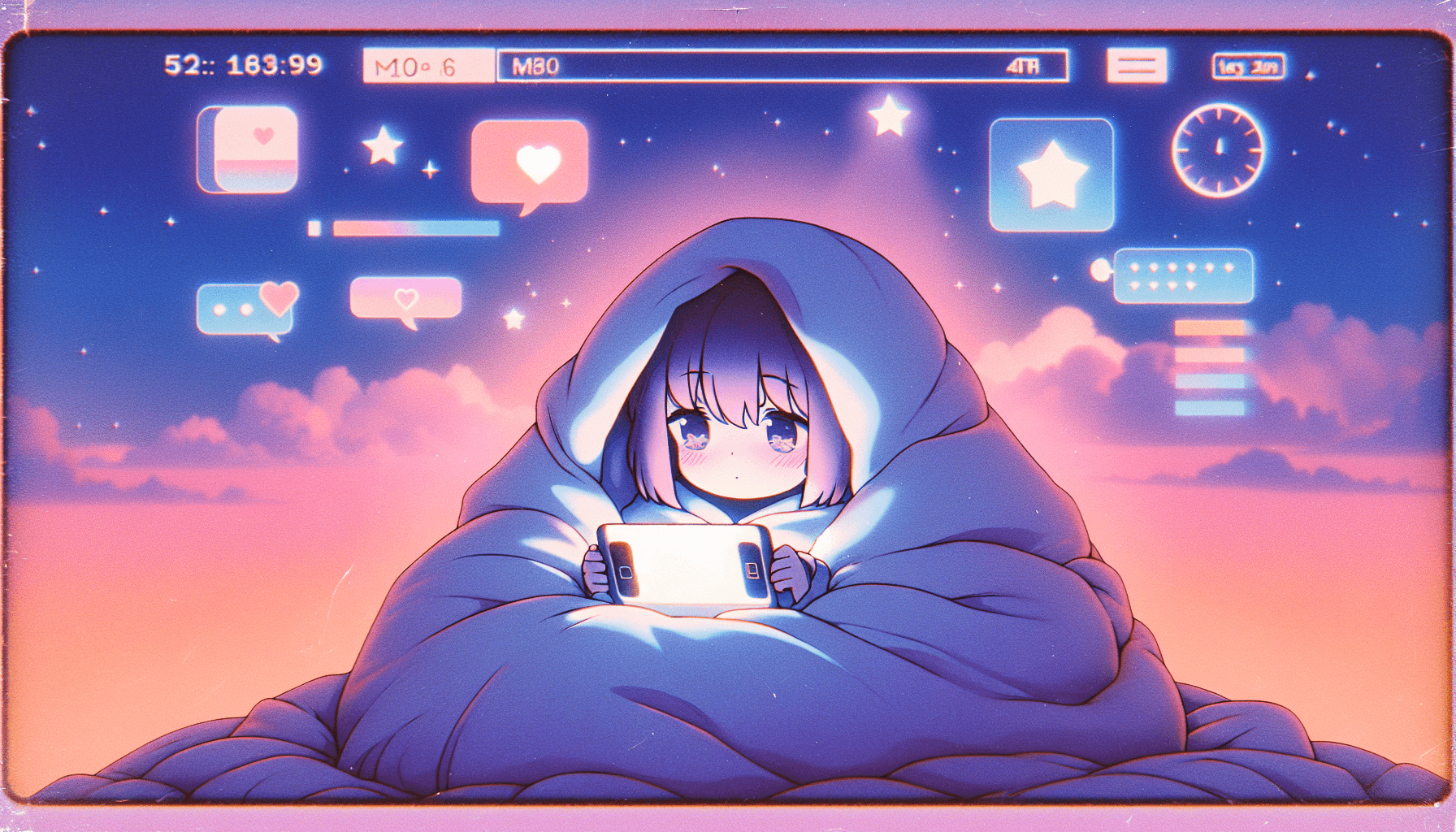
The content consumption pattern of a Doomscroll Goblin is actually revealing. You're probably not watching challenging content. You're watching comfort content — rewatching shows you've seen, following creators who feel like friends, falling into rabbit holes that require zero emotional investment. This isn't entertainment. It's emotional anesthesia. Your brain is performing the digital equivalent of wrapping itself in a weighted blanket and refusing to come out.
Your energy isn't gone — it's trapped. Under the numbness, under the "I don't care" posture, there's a person who cares so much about so many things that the only way to survive was to stop caring about everything. The doomscrolling isn't the problem. It's the solution your brain found when the real problems felt too overwhelming to face.
Recovery for you isn't about willpower or app timers or putting your phone in a different room. It's about gradually making reality feel less threatening than the screen. That might mean one tiny engagement with the real world per day — a walk where you leave your phone behind, a conversation where you're actually present, a task so small it doesn't trigger the avoidance response. The goal isn't to suddenly become a person who "touches grass." It's to slowly remember that grass exists, and sometimes it feels kind of nice.